Table des Matières
When we started KABAS AI, the first question we were asked — by investors, by potential customers, by family members who thought we should get proper jobs — was some version of this: "Why build AI in Algeria? Why not just use what's already out there?"
It is a fair question. The global AI landscape in 2024 and 2025 was filled with powerful tools from well-funded American and European companies. OpenAI, Google, Microsoft, Mistral — the list of capable AI providers was long and growing. Why compete with that? Why build from scratch in Algiers?
The answer is not that we underestimate these companies. We respect what they have built. The answer is that what they have built was not built for us, does not serve our specific needs, and was never designed to protect our interests. And we believe — deeply, after years of working inside Algerian and MENA industrial enterprises — that this gap is not a minor inconvenience. It is a structural problem with serious long-term consequences.
What "Sovereign" Really Means
The word "sovereign" gets attached to a lot of AI marketing these days, often meaning little more than "we have a data center in your country." We want to be precise about what we mean when we talk about sovereign AI, because the distinction matters.
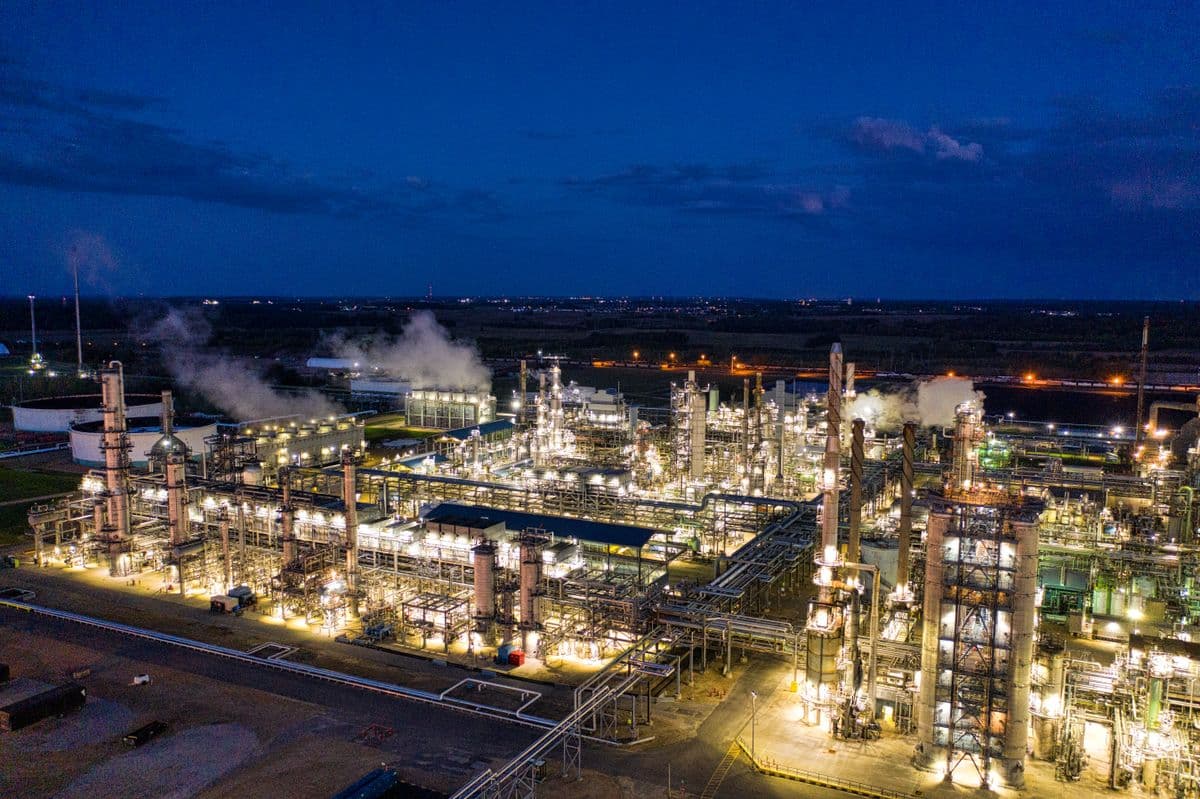
Data sovereignty means your operational data never leaves your control. Not in transit, not at rest on a vendor's servers, not processed by systems you do not own. For an Algerian oil and gas facility, a chemical plant, or a state-owned manufacturer, this is not a preference — it is a requirement. Your process data contains production yields, process formulas, equipment specifications, and strategic operational information. It belongs to you, and it should stay with you.
Model sovereignty means the AI that reasons about your operations understands your context — your language, your regulations, your sector's terminology, and your cultural norms for how decisions get made and communicated. A model trained on English-language Wikipedia and American business texts does not understand a maintenance report written in Algerian technical Arabic by a technician trained under French engineering standards, referencing equipment from German manufacturers installed in the 1990s. Sovereign AI understands this document. General-purpose AI guesses at it.
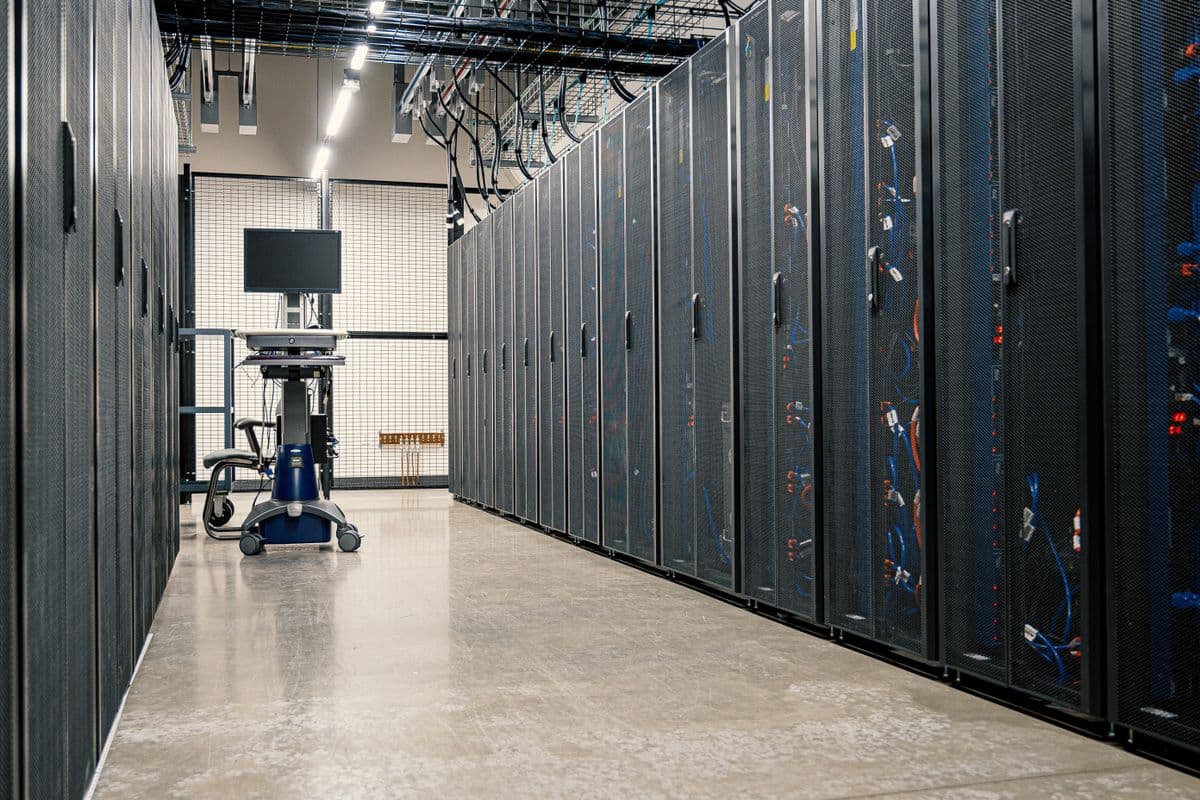
Compute sovereignty means having the technical capacity to run AI on infrastructure you control — either on-premise at your facility or in computing infrastructure under Algerian jurisdiction. It means not being dependent on the continued goodwill of a foreign company's API, not being affected by export control decisions made by foreign governments, and not having your AI capabilities suspended because a vendor decided to change its pricing model or terms of service.
Talent sovereignty means building the local expertise — engineers, data scientists, domain specialists — who understand both AI and the specific industrial and regulatory context of Algeria and MENA. Without local talent, you cannot build, maintain, or evolve AI systems that serve local needs. Sovereignty in AI is ultimately about people, not just technology.
KABAS AI is building all four dimensions. This is what we mean by sovereign AI.
The Gap That No One Was Filling
When we looked at the AI market serving MENA industrial enterprises in 2023 and 2024, we saw a remarkable gap.
The large American AI companies — even those with regional offices in Dubai or Riyadh — were fundamentally focused on global markets. Their products were designed for English-speaking, US-regulated, cloud-connected enterprises. Adapting them to work in Arabic, to run on-premise, and to understand the regulatory context of Algeria or Egypt or Iraq was treated as an edge case, not a core design priority.
The European AI companies had better multilingual capabilities but shared the same fundamental architectural preference for cloud deployment and the same cultural distance from MENA industrial operations.
The big international industrial automation and AI vendors — Siemens, Honeywell, ABB — had products designed for their existing industrial control system customer base. Their AI offerings were proprietary, expensive, locked into their own hardware ecosystems, and entirely absent from any serious conversation about Arabic language capabilities.
Local technology companies in Algeria and across the region had strong domain knowledge but limited AI research and development capacity. The talent was being trained — Algerian engineering universities are producing graduates of serious caliber — but had not yet been organized around the specific challenge of building production-grade industrial AI.
The gap was clear: no serious, sovereign, Arabic-first AI company was building specifically for MENA industrial enterprises. KABAS AI exists to fill that gap.
Algeria's Moment
We did not choose Algeria as a base of operations out of sentiment. We chose it because the analysis points here.
Algeria has the largest economy in Africa by GDP at purchasing power parity. It has one of the most significant hydrocarbon sectors in the world, with infrastructure that spans decades and complexity that demands sophisticated operational tools. It has a manufacturing base that is being actively expanded under national industrialization policy. It has a government that has, in its National Artificial Intelligence Strategy, explicitly recognized AI sovereignty as a strategic objective.
And it has an engineering talent base that is underutilized. Algerian engineers and computer scientists have the training and the capability to build world-class AI systems. What has been missing is the right organization to focus that talent on the specific challenge of sovereign industrial AI for the local market.
We believe the moment for this is now, not five years from now. The global AI wave will not wait. Every year that Algerian industrial enterprises operate without sovereign AI tools is a year in which the gap between their operational efficiency and that of their international competitors grows. Every year that Algerian technical documents, process data, and operational knowledge sit in systems that foreign AI companies cannot read is a year of competitive disadvantage that compounds.
The urgency is real. The opportunity is real. And the window to build the foundational AI infrastructure for MENA industrial enterprises — before foreign companies figure out how to do it adequately — is not infinite.
Building Algeria's AI Ecosystem
We take seriously that KABAS AI's mission is not just to build products for sale. It is to help build an ecosystem.
This means investing in training programs for industrial AI practitioners — not generic data science courses, but domain-specific education that teaches engineers how to apply AI to the specific problems of oil and gas operations, chemical plant management, and industrial maintenance in the Algerian and MENA context.
It means publishing knowledge — technical guides, frameworks, case studies — that help industrial enterprises understand what AI can and cannot do for them, and how to evaluate and implement it responsibly. Some of this knowledge we keep proprietary because it powers our products. Much of it we share openly, because the ecosystem benefits us as much as it benefits everyone.
It means partnering with Algerian universities, research institutions, and the national AI strategy apparatus — not as a political gesture, but because the talent pipeline and the institutional knowledge base that Algeria is building are genuinely important to what we are trying to do.
We are not building KABAS AI in spite of being Algerian. We are building it because being Algerian — understanding this context from the inside, having relationships with the industrial enterprises and the regulators and the engineering community — is a competitive advantage that no company parachuting in from Silicon Valley can replicate.
An Honest Look at the Challenges
Mission-driven founding stories can become hagiographies if you are not careful. We want to be honest about where we are and what is hard.
The MENA AI market is still maturing. Many industrial enterprises are in the early stages of digitalization — still implementing ERP systems, still building data infrastructure — which means AI adoption timelines are longer than they would be in markets where the digital foundation is already in place. We have had to build a consulting practice alongside our product business because many of our best potential customers need help getting ready for AI before they are ready to buy AI.
Building software products for industrial enterprises is slow and demanding. The sales cycles are long. The procurement processes are complex. The validation and integration requirements are rigorous — appropriately so, given the consequences of AI errors in industrial environments. This is not a business where you ship a mobile app and grow virally. It requires patient capital, long-term customer relationships, and a willingness to do the hard integration and change management work that makes AI actually deliver on its promises.
Arabic-first AI is technically harder than English-first AI. The research base, the pre-trained models, the benchmarks, and the tooling ecosystem are all less mature for Arabic than for English or French. We have invested significantly in building capabilities that do not yet exist off the shelf. This investment is necessary, but it is not free.
We are aware of these challenges. We have not built our business plan on optimistic assumptions about how quickly they will resolve. The opportunity is large enough — and the strategic imperative clear enough — that the challenges are worth working through.
The Long-Term Vision
Five years from now, we want every significant industrial enterprise in Algeria and the MENA region to be running operational AI systems that speak their language, protect their data, and were built to understand their specific industrial and regulatory context.
We want MENA to have produced a generation of industrial AI practitioners — engineers, data scientists, and operations leaders — who do not need to look outside the region for expertise on AI deployment in industrial environments.
We want the phrase "sovereign AI" to mean something concrete in the MENA industrial context: not a marketing slogan, but a recognized standard for how AI systems that handle sensitive industrial data should be designed and deployed.
And we want KABAS AI to be the company that helped build all of this — not by being the only player, but by being the founding player that demonstrated it was possible, showed how it should be done, and created the space for an ecosystem to grow around it.
This is why we are here. This is why we are building. And this is why — if you are an industrial enterprise in Algeria or the MENA region wondering whether to trust your AI future to a company that was built for your context — we believe the answer should increasingly be: trust the company that was built here, for here.
We are KABAS AI. This is our mission.