جدول المحتويات
Every industrial facility in Algeria and across the MENA region is sitting on a mountain of knowledge that its own workforce cannot easily access. Thousands of pages of equipment manuals. Maintenance reports written in a mix of Arabic, French, and English — sometimes all three in the same document. Regulatory compliance requirements scattered across PDFs from a dozen government agencies. Historical incident reports that could prevent future failures — if anyone could find them and read them quickly enough.
The information exists. The problem is access.
For the past two years, industrial enterprises have watched the rise of large language models like ChatGPT and ask the same question: can we use something like this for our technical documents? The answer from the major AI providers has been: yes, but your documents need to go to our servers in the United States or Europe.
For most Algerian industrial operators — in oil and gas, chemicals, manufacturing, or state-owned enterprises — that answer is not acceptable. Sensitive process data, proprietary maintenance knowledge, and operational documents cannot be sent to external servers. Regulations, company policy, and common sense all point in the same direction: this data stays on-premise.
DALILE is our answer to this problem.
What DALILE Is
DALILE is a large language model designed and deployed specifically for industrial enterprises in Algeria and the MENA region. It is built to run entirely on your hardware, inside your facility or private cloud, with no external API calls and no data leaving your control.
At its core, DALILE is a retrieval-augmented generation (RAG) system: it indexes your organization's document library and allows any authorized user to ask questions in natural language — in Arabic, French, or English — and receive accurate, sourced answers drawn from your own documents.
But DALILE is more than a document search engine. It understands industrial context. It knows the difference between a vibration sensor and a pressure transducer. It recognizes maintenance codes, equipment classifications, and process terminology specific to your sector. And it speaks the language your teams actually use on the plant floor — including the Darija-influenced technical terminology that no American AI model has ever been trained to understand.
The Problem DALILE Solves
Consider a maintenance technician preparing for a corrective maintenance intervention on a centrifugal pump that has been throwing abnormal vibration alarms. He needs to know:
- What are the manufacturer's torque specifications for the bearing housing bolts?
- Was there a similar failure on this pump model in the last three years, and what was the root cause?
- Does this intervention require a work permit under the site's HSE procedure for rotating equipment?
- Are there any open work orders related to this asset?
Without DALILE, answering these four questions requires the technician to search through a physical manual, contact the document management system administrator, ask a senior colleague who was there three years ago, and open the CMMS. This takes thirty to ninety minutes — assuming all the information can even be found.
With DALILE, the technician types the question in Arabic. DALILE searches across the indexed document library — manuals, maintenance reports, HSE procedures, work orders, and CMMS records — and returns a synthesized answer with citations in under fifteen seconds.
Multiply this across every maintenance intervention, every engineering decision, every HSE query, and every management report across your organization, and the operational impact becomes significant quickly.
Key Capabilities
Multilingual Document Intelligence
DALILE is trained and fine-tuned with deep support for Arabic — including Modern Standard Arabic and Algerian technical dialect — as well as French and English. It handles mixed-language documents naturally, which is essential for any organization that, like most Algerian industrial enterprises, has documents written across multiple languages depending on when they were produced and by whom.
Documents can be ingested in PDF, Word, Excel, and plain text formats. DALILE automatically segments, indexes, and embeds document content so that queries return accurate, contextually relevant results regardless of document format or language.
Technical Domain Knowledge
General-purpose LLMs know a lot about many things, but they do not know the specific vocabulary, standards, and reasoning patterns of industrial maintenance, process operations, or HSE compliance in the MENA context. DALILE is fine-tuned on industrial domain knowledge, including international standards (ISO, IEC, API), Algerian regulatory frameworks, and sector-specific terminology for oil and gas, petrochemicals, manufacturing, and mining.
This domain tuning means DALILE's answers are not just linguistically correct — they are industrially accurate and contextually appropriate.
ERP and CMMS Integration
DALILE connects to your enterprise resource planning (ERP) system and computerized maintenance management system (CMMS) to provide real-time operational context alongside document knowledge.
When a user asks about an asset, DALILE can pull current work order status, spare parts inventory, equipment history, and maintenance schedules from the ERP — combining this live operational data with the relevant procedure or specification from the document library. This integration turns a document Q&A tool into a genuine operational intelligence assistant.
Integration is supported for SAP, Oracle ERP, Maximo, and other major CMMS platforms through standard API connections.
SCADA and Process Data Awareness
For operations use cases, DALILE can be connected to process data through the KABAS AI data integration layer. This allows operational queries like "what was the average throughput on Unit 3 last week compared to the same period last year?" alongside document queries — enabling engineers and managers to get integrated answers that combine process performance data with relevant technical or regulatory context.
Deployment Options
On-Premise Bare Metal
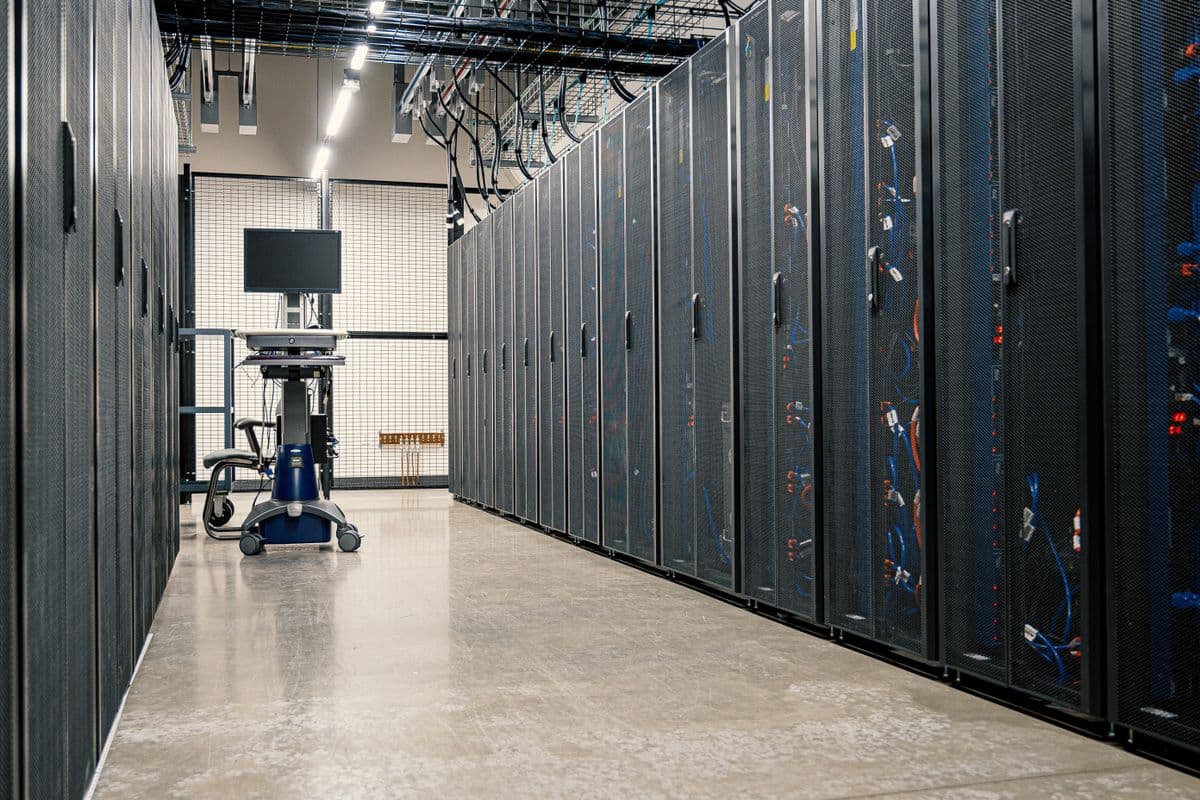
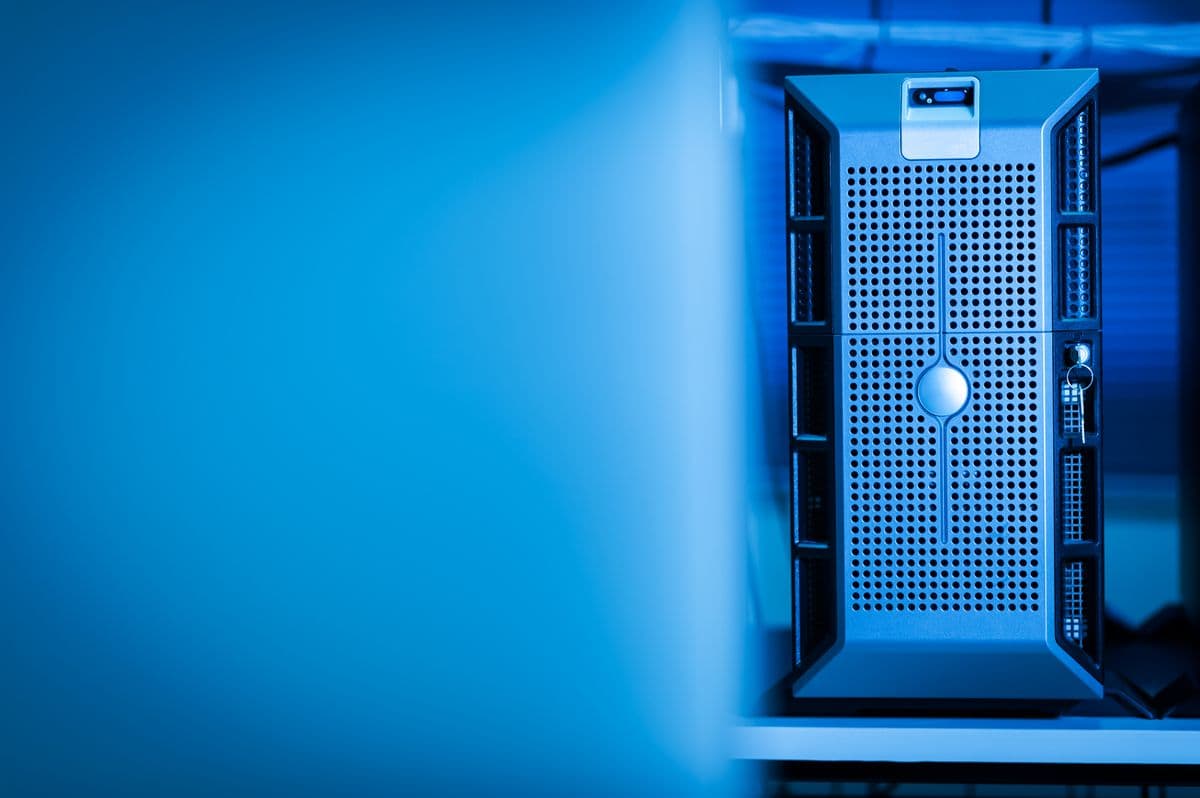
The primary deployment mode for Algerian industrial customers is on-premise on customer-owned hardware, installed and configured inside your facility. DALILE runs on a GPU-equipped server that your IT team controls. There is no internet dependency, no subscription data channel, and no vendor access to your systems after initial deployment. This is the maximum security option and the one most appropriate for regulated industries.
Hardware requirements depend on your document library size and number of concurrent users. A typical mid-size facility deployment runs on a server with 2 × NVIDIA A100 or equivalent GPUs, 256 GB RAM, and 8 TB of NVMe storage. KABAS AI provides hardware specification guidance as part of the procurement process.
Private Cloud Deployment
For organizations that prefer to run workloads in a private cloud environment — on an Algerian sovereign cloud provider or a dedicated cloud tenant — DALILE can be deployed as a containerized workload (Kubernetes) that runs entirely within your private cloud boundary. No data transits public cloud infrastructure.
Hybrid Deployment
In hybrid configurations, the AI model and sensitive document indexes run on-premise, while management interfaces and user access tools run in a controlled private cloud environment. This combines the security assurance of on-premise model execution with the accessibility of a cloud-hosted user interface — useful for large organizations with multiple sites.
Security Features
No external API calls. Once deployed, DALILE makes zero outbound connections to external servers or APIs. Inference happens entirely on your hardware. There is nothing to intercept in transit because nothing leaves your network.
Full audit logging. Every query, every document access, and every answer generated by DALILE is logged with user identity, timestamp, and the document sources referenced. This audit trail is available for compliance reviews and internal governance purposes.
Role-based access control. Document access in DALILE mirrors your organization's document classification structure. Maintenance technicians can query maintenance manuals and work orders but not financial records. HSE staff can access safety procedures and incident reports. Management can access cross-functional dashboards. Access is enforced at the document index level, not just the interface level.
On-premise model weights. The DALILE model weights are delivered to your hardware during deployment. Your organization owns the deployment — there is no "phone home" mechanism, license server dependency, or remote kill switch.
Use Cases by Department
| Department | Primary DALILE Use Cases | |------------|--------------------------| | Maintenance | Equipment manual Q&A, fault diagnosis support, spare parts lookup, work order history | | HSE | Procedure compliance checks, incident report search, permit-to-work guidance, regulation lookup | | Engineering | Technical specification search, design standard queries, modification history retrieval | | Operations | Shift report generation, process parameter reference, operating procedure clarification | | Management | Performance reporting, regulatory compliance status, cross-site knowledge consolidation |
DALILE vs. ChatGPT or Copilot for Industrial Use
The most common comparison we are asked about is: why not just use ChatGPT Enterprise or Microsoft Copilot?
The answer is straightforward. Both products send your documents and queries to servers operated by their respective vendors in the United States or Europe. For general business use this may be acceptable. For industrial operations where documents contain proprietary process designs, safety system specifications, production yields, and strategic operational knowledge, the calculus is different.
Beyond the data residency issue, neither ChatGPT Enterprise nor Microsoft Copilot is trained on Arabic industrial terminology, Algerian regulatory frameworks, or the specific vocabulary of your sector. Their answers are general. DALILE's answers are specific to your documents, your systems, and your operational context.
DALILE is not a general-purpose AI assistant. It is an industrial knowledge system designed for your facility, running on your hardware, answering in your team's language.
Getting Started with DALILE
A DALILE deployment typically follows a four-phase process:
- Discovery (2 weeks): Document inventory, user requirements gathering, hardware sizing, and integration scope definition.
- Infrastructure (2–3 weeks): Hardware procurement or private cloud setup, network configuration, and DALILE platform installation.
- Onboarding (3–4 weeks): Document ingestion, indexing, ERP/CMMS integration configuration, user access setup, and accuracy validation.
- Training and Go-Live (1–2 weeks): User training for each department, pilot group feedback, and production deployment.
Total time to production deployment for a typical mid-size facility: 8–11 weeks.
Contact the KABAS AI product team to schedule a DALILE demonstration with your own documents.